Shakuntala
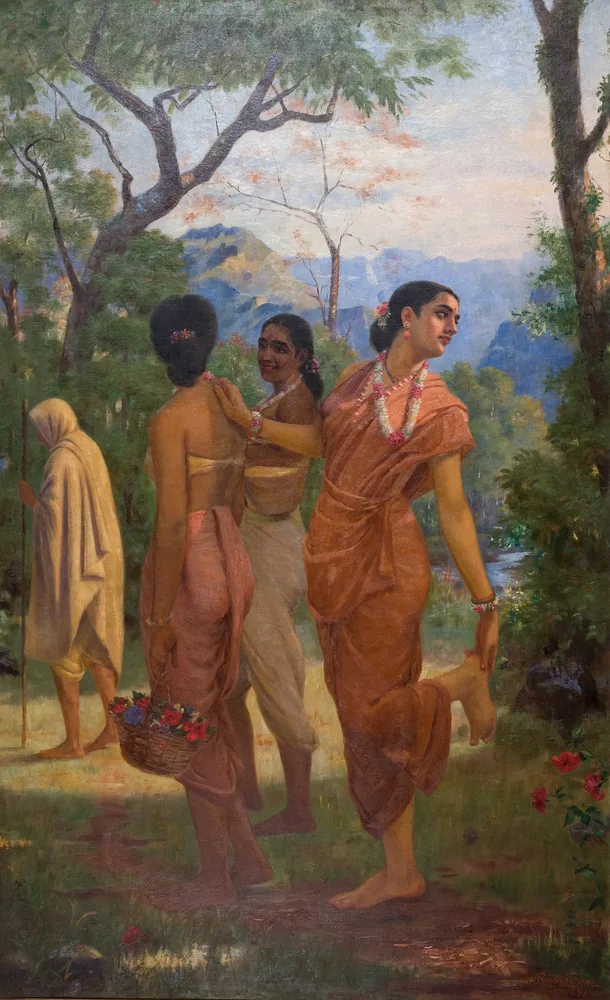
In his 1898 epic painting Shakuntala, also known as Shakuntala looking for Dushyanta, Indian artist Raja Ravi Varma brings to life a celebrated episode from the ancient epic Mahabharata. The composition depicts Shakuntala pausing under the pretense of plucking a painful thorn from the sole of her foot. In reality, she twists her torso and turns her head to steal a longing backward glance at her beloved husband, Dushyantha, while her observant companions playfully tease her and expose her clever ruse. Ravi Varma crafts this moment as a captivating frozen tableau, resembling a dramatic still captured from an ongoing theatrical performance. As art historian Tapati Guha-Thakurta observed, Shakuntala's dynamic twist immediately draws viewers into the unfolding narrative sequence. Furthermore, the composition reflects the prevailing influence of the male gaze in shaping feminine imagery, establishing the absent lover as the invisible yet essential focal point around which the entire emotional scene revolves.
Look for
- Shakuntala twisting her body to look backward while pretending to tend to her foot
- Her companions playfully teasing her as they see through her excuse
- The implied presence of the absent lover Dushyantha anchoring the entire narrative
Read more on Wikipedia →